

DETOUR (AP) — President Donald Trump’s proposed 25% duty on imported vehicles such as cars, light trucks, and automotive components could lead to higher costs for consumers who are finding it increasingly difficult to purchase a new vehicle. These taxes may compel automobile manufacturers to reconsider which models they produce and where these products are manufactured.
For years, Trump has been eager to tax imported cars. During his initial term, he labeled car imports as a risk to national security, thereby granting himself the power to enforce tariffs on these goods. This week, he proceeded with imposing such duties. These will go into effect at midnight on April 3rd.
This is the most recent among several automotive sector moves by Trump since he returned to the White House. Automotive firms are likewise adjusting their strategies. the rollback of fuel efficiency regulations , dialed reduce greenhouse gas emission guidelines and a leader behind the reversals in electric vehicle policies .

Certain aspects of the auto tariffs proposed by Trump still need to be finalized.
For example, it’s unclear whether the new auto tariffs would stack on top of 25% import taxes set to be levied next week on all goods from Canada and Mexico. That would mean cars from Canada and Mexico could potentially face new tariffs of 50%.
For the moment, the Trump administration has excluded vehicles, light trucks, and automotive components that meet the criteria for duty-free status under the US-Mexico-Canada Agreement—a deal President Trump struck five years back—from the new tariffs. However, he plans to limit this exception so that only items produced within the United States—excluding those from Canada or Mexico—are eligible. Implementing this change would necessitate establishing procedures to verify which goods can be classified as American-made, a process that might take several weeks or even months to put into place.
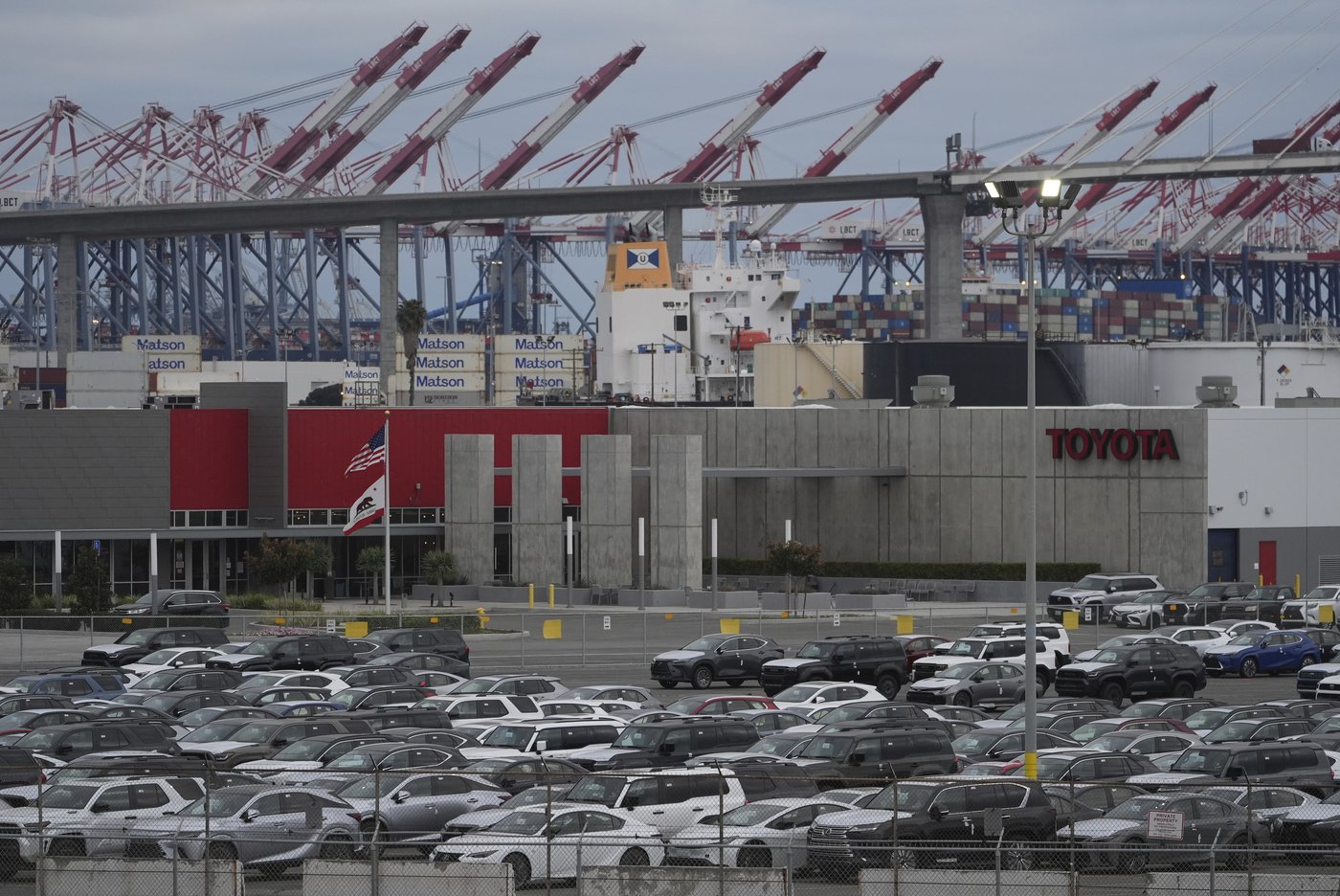
The White House additionally mentioned that the import duty would cover "essential" automotive components such as engines, transmissions, powertrain elements, and electrical parts. Furthermore, they indicated that these duties might be extended to additional car parts should this become necessary.
Here’s additional information you should be aware of:
What makes tariffs particularly difficult for the automotive sector?
As car manufacturers extended their reach worldwide, they developed intricate and effective supply chains that crossed national borders. For example, in North America, Mexico offers lower-cost labor and produces smaller, cheaper vehicles, whereas Canada and the U.S. contribute higher-skilled labor and advanced technology.

Trump's tariffs are intended to bring auto manufacturing back to the United States. But it won't be easy.

Redirecting the supply chain for thousands of components imported into the U.S., along with relocating assembly processes, would require several years.
"It contributes to the growing ambiguity for all car manufacturers since the automotive sector's supply chain is fundamentally international and has been fine-tuned to efficiently transport parts across countries where previous free trade pacts were in place," explained John Paul MacDuffie, a management professor at the University of Pennsylvania.
Sam Fiorani, an analyst from AutoForecast Solutions, points out that although manufacturers of high-end European cars and their customers might be able to handle some pricing changes, “the real impact will be felt by companies such as Toyota, Mazda, and Subaru, which rely heavily on importing significant portions of their vehicle lines."
"Imposing tariffs on vehicle components manufactured in Mexico and Canada that do not originate from the United States will negatively impact the earnings of General Motors, Stellantis, and Ford over the coming quarters, resulting in losses amounting to billions," he noted.

Trump's tariffs — which he insists are permanent — will force companies to make hard choices.
"It will compel businesses to boost their U.S.-made content" if they wish to avoid the import duties, stated Richard Mojica, a trade lawyer from Miller & Chevalier.
Even though Vanessa Miller, who leads the automotive team at the law firm Foley & Lardner, admits that certain businesses can shift their operations to the U.S., many remain closely linked to facilities in Mexico or other locations and won’t be able to relocate quickly.
Car manufacturers may need to discontinue certain vehicle models as these would become unprofitable due to the imposed tariffs. According to Ivan Drury from the automotive site Edmunds, the tariffs affect "everybody in such a way that forces reconsideration of all aspects." This situation will likely persist for "at least three or four years," he noted; this isn’t an issue one could simply wait out.

How will this affect car purchasers and the pricing of new vehicles?
Beata Caranci and Andrew Foran from TD Economics predict that the tariffs might increase the average price of cars and light trucks in the U.S., which was over $47,000 last month, by potentially $5,000 should manufacturers transfer the complete expense to buyers. The prices may soar even further—up to an additional $10,000—if the Trump administration decides to impose the levy fully on vehicles produced in Mexico and Canada.
Car manufacturers and their partners are just beginning to rebound from years of instability triggered by pandemic-induced production stoppages, a sweeping semiconductor shortage and scarce stock at dealership locations. This led to Prices were through the roof, incentives were minimal, and good deals were scarce. .
At the height of the pandemic, customers continued to purchase vehicles despite higher costs. However, additional tariffs might make new cars unaffordable for numerous potential purchasers, particularly considering growing signs of possible financial strain. wider inflation spreading across the entire economy .
Almost instantly, customers will notice that their already costly new cars will become even pricier, with increases ranging from several hundred to thousands of dollars. These costs will continue to rise as supplies of numerous crucial vehicle models diminish," Fiorani stated. "Consider the price hikes experienced during the semiconductor shortage but extend them across all brands and manufacturers. This cascading impact will lead to smaller suppliers going bankrupt and push many employees into unemployment.
What about used cars?
Increasing the cost of new vehicles through tariffs may push consumers towards purchasing used cars instead. However, with a restricted supply of pre-owned models available, this surge in demand might also cause used car prices to rise even further. It’s worth noting that these currently average around $25,000.
Lease penetration, which refers to the proportion of vehicle deals that involve leasing, has typically hovered around 30% over the last decade, as per Edmunds information.
However, the sector experienced minimal leasing activity — roughly half the usual rate — especially from May 2022 through January 2023. This scarcity of lease returns generally leads to a reduced number of two- or three-year-old cars entering the pre-owned vehicle market.
Therefore, a scarcity of pre-owned vehicles may emerge precisely when more purchasers begin looking for them.
What has been the response from the industry?
Governor Matt Blunt, who serves as the president of the American Automotive Policy Council representing U.S. carmakers, stated that these companies backed President Trump’s initiatives aimed at strengthening domestic automobile production. However, he warned that "it is essential to implement tariffs in a manner that does not lead to higher costs for buyers and maintains the competitive edge of the interconnected North American automotive industry."
The United Auto Workers labor union welcomed the imposition of tariffs. "Halting the downward spiral in the automotive sector begins with reforming our flawed trade agreements, and the Trump administration has made significant progress with today’s measures," stated UAW President Shawn Fain. "This tariff move marks considerable advancement towards supporting workers and blue-collar towns nationwide. It is now up to automobile manufacturers, including those from the Big Three as well as companies like Volkswagen, to reintroduce quality union positions within the U.S."
However, Jennifer Safavian, who serves as both the president and CEO of Autos Drive America—a group representing foreign carmakers—condemned the tariffs. She stated, "These newly implemented duties will increase costs associated with producing and selling vehicles within the United States. As a result, this could lead to elevated prices, reduced choices for buyers, and diminished employment opportunities in automobile manufacturing across our country."
___
Wiseman provided reporting from Washington. Associated Press journalist Josh Boak also contributed to this report.
___
Alexa St. John is a climate journalist for the Associated Press. You can follow her on X: @alexa_stjohn . Reach her at ast.john@ap.org .
___
The Associated Press' reporting on climate and environment is financially supported by several private foundations. However, AP maintains full responsibility for all content. For more information about AP’s work, please visit their website. standards for collaborating with charities, a roster of contributors along with supported outreach zones is provided AP.org .
Alexa St. John and Paul Wiseman from The Associated Press